


Invest in Oregon Coast Real Estate: Your 2026 Investment Property Guide
- littlefieldmarly

- May 24
- 5 min read
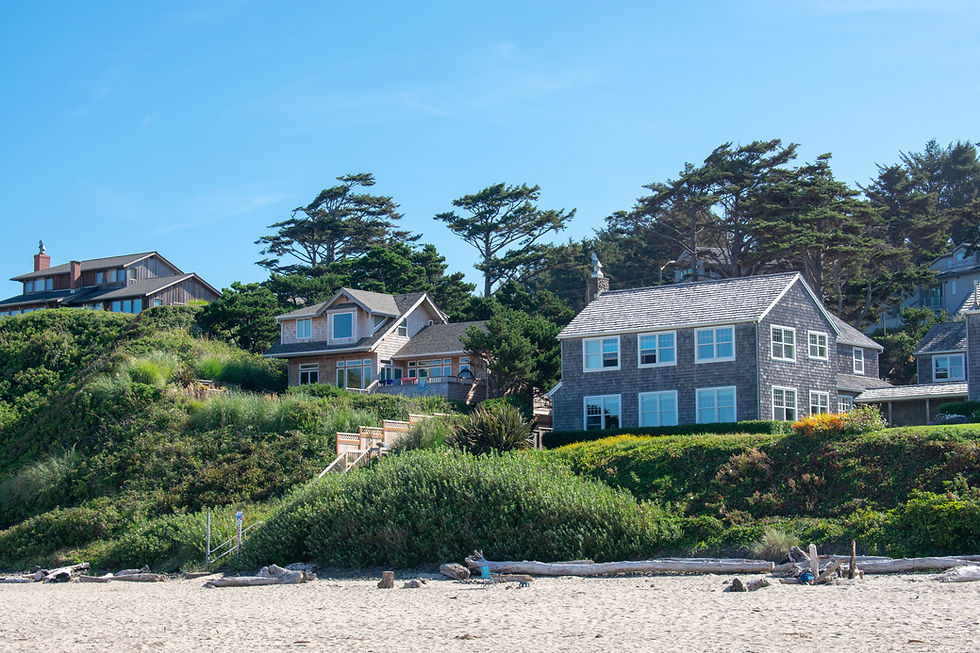
The Oregon Coast real estate market offers compelling opportunities for investors. Between vacation rental potential, long-term rental income, property appreciation, and unique buyer demand, coastal properties can generate solid returns. This guide covers everything investors need to know about success on the Oregon Coast.
Investment Property Types on the Oregon Coast
Vacation Rental Properties (Short-Term Rentals/STRs): These are the most common investment properties on the Oregon Coast. Beachfront and oceanview homes generate strong nightly rates during summer season. Properties in family-friendly towns like Cannon Beach and Seaside command premium nightly rates. Good STR properties generate $30,000-$60,000+ annually depending on location and season.
Long-Term Rental Properties: Steady, lower-risk income stream. Tenant-occupied homes generate $1,500-$2,500 monthly depending on location and property size. Less volatile than STRs but also lower nightly rates. Ideal for investors seeking stable income over appreciation.
Fixer-Upper Properties: Buy undervalued coastal properties needing repairs, rehabilitate them, then either rent or resell. Requires capital for renovations and understanding of coastal repair costs (higher than inland due to salt air and weather). Average hold time: 12-18 months.
Land Investment: Raw land near desirable coastal communities appreciates steadily. Less rental income potential but strong long-term appreciation. Ideal for patient, long-term investors.
Owner-Occupied Properties (Live in + Rent Extra Rooms): Owner occupies primary living space and rents additional bedrooms or guest house. Generates income while building equity. Popular with remote workers and semi-retirees.
Understanding Oregon Coast STR (Vacation Rental) Potential
Vacation rental is the most popular investment strategy on the Oregon Coast. Here's what investors need to know:
Peak Season (June-September): Summer months command highest nightly rates ($150-$400+ per night depending on property). Booking rates near 100%. This 4-month period generates 50%+ of annual STR income.
Shoulder Seasons (April-May, September-October): Moderate demand, reasonable rates ($80-$180 per night). 70-80% booking rates. Good supplementary income.
Off-Season (November-March): Lower demand, reduced rates ($60-$120 per night). 40-60% booking rates. Slower period but still generates meaningful income.
Location determines STR success. Oceanfront properties in premium towns (Cannon Beach, Depoe Bay) command highest rates. Town-center properties with beach access perform well. Quiet artist communities (Manzanita) attract different clientele with willingness to pay. Remote, isolated properties struggle to attract consistent bookings.
STR Revenue Calculation Example:
Oceanview home in Cannon Beach:
- Peak season (120 nights): $250/night = $30,000
- Shoulder (60 nights): $130/night = $7,800
- Off-season (90 nights): $80/night = $7,200
- Total annual gross revenue: $45,000
- After 30% for operating costs (cleaning, HOA, utilities, management): $31,500 net
Market Analysis by Town
Cannon Beach: Premium market, highest rates, strong demand. Excellent STR investment potential but highest purchase prices. Entry price: $800,000.
Seaside: Family-friendly, strong summer demand, good STR performance. More affordable than Cannon Beach. Entry price: $350,000-$500,000. Annual STR revenue: $25,000-$40,000.
Depoe Bay: Whale watching capital, steady demand, scenic appeal. Unique properties command premium rates. Entry price: $400,000-$600,000. Annual STR revenue: $30,000-$50,000.
Manzanita: Artist community, quieter market, appeals to creative travelers. Lower rates but dedicated clientele. Entry price: $600,000. Annual STR revenue: $20,000-$35,000.
Newport: Larger city, more amenities, good rental demand both STR and long-term. Most flexible market. Entry price: $400,000. Annual STR revenue: $15,000-$30,000.
Oceanside: Tiny, exclusive village. Limited inventory, high desirability for those seeking privacy. Higher per-night rates, lower booking volume. Entry price: $600,000-$700,000. Annual STR revenue: $25,000-$40,000.
Financing Investment Properties
Investment property financing differs from primary residence financing. Most lenders require:
Down Payment: 20-25% typical (vs. 5-10% for primary residence). Higher down payment reflects higher risk perception.
Cash Reserves: 6-12 months of mortgage, taxes, insurance, HOA, and operating costs. Shows lender you can weather income fluctuations.
Debt-to-Income Ratio: Must qualify based on income, not rental income potential. Your W2 income typically needs to support mortgage payment.
Interest Rates: Investment properties typically carry 0.5-1% higher rates than primary residences.
Credit Score: 720+ typically required for competitive rates.
Consider: Bank financing vs. portfolio lenders vs. private lending. Each has different requirements and rates.
Calculating ROI and Cash Flow
Before investing, calculate expected returns:
Cap Rate Calculation: Annual Net Operating Income ÷ Purchase Price = Cap Rate
Example: $30,000 annual net income ÷ $400,000 purchase price = 7.5% cap rate
Cash-on-Cash Return: Annual Cash Flow ÷ Cash Invested = Annual Return
Example: $15,000 annual cash flow ÷ $100,000 down payment = 15% annual return
Total Return includes: Annual cash flow + appreciation + principal paydown
Conservative assumption: 3-4% annual appreciation on Oregon Coast properties
Break-Even Analysis: How long until cumulative cash flow + appreciation = investment
Example: $100,000 down, $15,000 annual cash flow = 6-7 years (before accounting for appreciation)
Coastal-Specific Investment Challenges
Weather Risk: Storm damage, flooding, erosion. Insurance costs higher. Plan maintenance reserves.
Seasonal Volatility: STR income depends on weather and tourism patterns. Plan for off-season gaps.
Property Management: Managing STRs or long-term rentals remotely requires professional property manager (15-30% of rental income cost).
Maintenance Costs: Salt air damage, roof stress from wind, frequent painting/exterior maintenance. Budget 1-2% of property value annually.
Regulatory Changes: City/county regulations on short-term rentals evolving. Verify STR legality and restrictions before purchasing.
Guest Management: STR properties require furniture, linens, kitchens stocked. Higher turnover costs and vacancy management.
Common Investment Mistakes to Avoid
Overestimating STR Income: Don't assume 100% booking year-round. Conservative estimate: 65-75% annual occupancy.
Underestimating Operating Costs: Cleaning, utilities, maintenance, property management, insurance, property tax, HOA, guest linens/supplies. Total 30-40% of gross revenue typical.
Ignoring Local Regulations: Verify STR is legal in specific town/neighborhood. Some communities restrict or prohibit short-term rentals.
Poor Property Selection: Location determines success. Ocean view or beachside > inland view > remote. Town proximity matters for foot traffic.
Inadequate Capital: Under-capitalized investors struggle with unexpected repairs, vacancy periods, or financing costs. Start with properties that generate positive cash flow.
Not Using Professional Management: Self-managing STRs is time-intensive. Professional managers cost 20-30% of income but handle booking, cleaning, guest issues.
Building Your Investment Portfolio
Start with 1 property: Master the process, understand cash flow dynamics, build management systems.
Refinance with Equity: After appreciation, refinance and use equity for next property down payment.
Scale Gradually: Add properties 1-2 per year as you build experience and capital.
Diversify: Mix STR and long-term rentals, different towns, different property types.
Track Everything: Maintain detailed records for tax benefits, refinancing, sales documentation.
Your Oregon Coast Investment Success
Real estate investing on the Oregon Coast requires capital, patience, local knowledge, and professional guidance. Properties that generate positive cash flow while building equity create long-term wealth.
Working with an experienced Oregon Coast realtor who understands investment property dynamics ensures you find opportunities aligned with your financial goals. An expert can identify undervalued properties, analyze cash flow potential, and guide you through the investment process.
Ready to explore Oregon Coast investment opportunities? Connect with me today.
Comments